
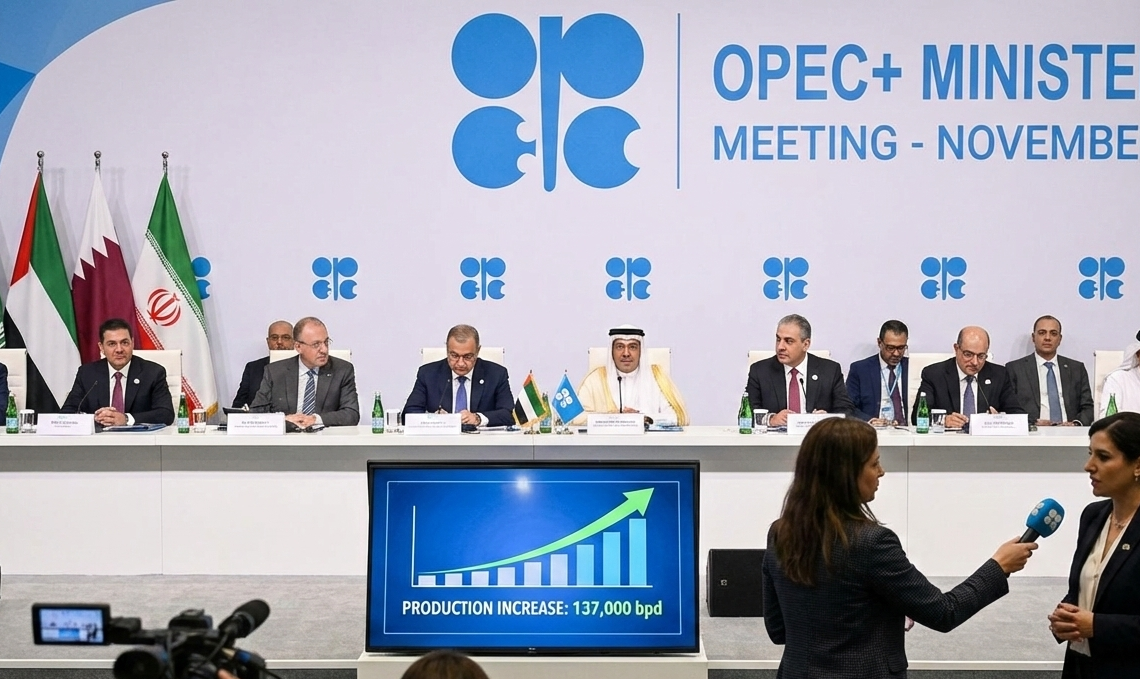
DUBAI — Saudi Arabia, Russia, and six other OPEC+ members have agreed to increase oil production by 137,000 barrels per day starting in November, the latest move in the group’s careful effort to unwind its voluntary output cuts while trying to regain market share.
The alliance announced the decision after an online meeting, saying it reflects a steady global economic outlook and “healthy market fundamentals,” pointing to low oil inventories as justification for the increase.
The added barrels will come from the 1.65 million barrels per day of extra voluntary cuts that were announced back in April 2023. It’s a small step, but it signals OPEC+ is continuing its slow march back toward higher production levels.
Jump Ahead To:
Saudi Arabia vs. Russia: Different Priorities
The decision came after several days of back-and-forth between the group’s two heavyweight producers, and their different priorities were on full display.
Russia, which has consistently pushed for caution, wanted a smaller increase to help support oil prices. Saudi Arabia, on the other hand, has been carrying the heaviest burden of the earlier production cuts and was pushing for a larger addition to start rebuilding its market share.
The 137,000-barrel compromise sits somewhere in the middle, though it’s closer to what Russia wanted than what the Saudis were reportedly pushing for. Some members had floated proposals for increases up to three times the agreed volume, according to delegates.
The Tricky Market Reality
Oil prices were trading near a four-year low on Friday, which underscores the challenge OPEC+ is facing right now. They want to bring more barrels back to market, but the market is already showing signs it might not be able to absorb much more supply without prices dropping further.
There are some worrying indicators. Unsold cargoes from the Middle East are piling up, and the oil futures curve is pointing to weaker short-term prices. The International Energy Agency is predicting global inventories will rise sharply in the final quarter of 2025 and has warned that a record surplus could hit by 2026 as demand cools and production from the Americas keeps surging.
So far, prices have held up reasonably well despite OPEC+ gradually adding supply back. But market signals suggest that momentum might be fading, which puts the alliance in a difficult spot.
Not Much Room to Maneuver
Sunday’s decision also exposes how little flexibility OPEC+ actually has right now. Between May and September, members managed to restore only about 60% of the 2.2 million barrels per day they had planned to bring back. Part of that is because some producers had to correct for earlier overproduction. But the bigger issue is that several members are already pumping close to their maximum capacity.
That limits how quickly the group can really ramp up production even if they wanted to. It’s not just a matter of turning the taps—some of these countries simply don’t have much more oil they can realistically produce.
Political Timing
The timing is interesting. Saudi Crown Prince Mohammed bin Salman is expected to visit Washington next month for talks with U.S. President Donald Trump, who’s been vocal about wanting lower oil prices. Whether that factored into the decision is unclear, but it’s certainly hovering in the background.
Neither Saudi Arabia nor Russia immediately commented on the decision after it was announced.
Walking a Tightrope
What this all comes down to is OPEC+ trying to walk a very narrow line. They want to reclaim market share they’ve lost while keeping production curtailed. They need to support prices without letting them drop so low that it hurts their economies. And they’re doing all of this while demand signals are mixed and non-OPEC producers, especially in the Americas, keep pumping more oil.
The 137,000-barrel increase is cautious, almost timid. It shows the group is aware of how fragile the current balance is. Whether they can maintain that balance as they continue unwinding cuts remains the big question heading into 2026.
