
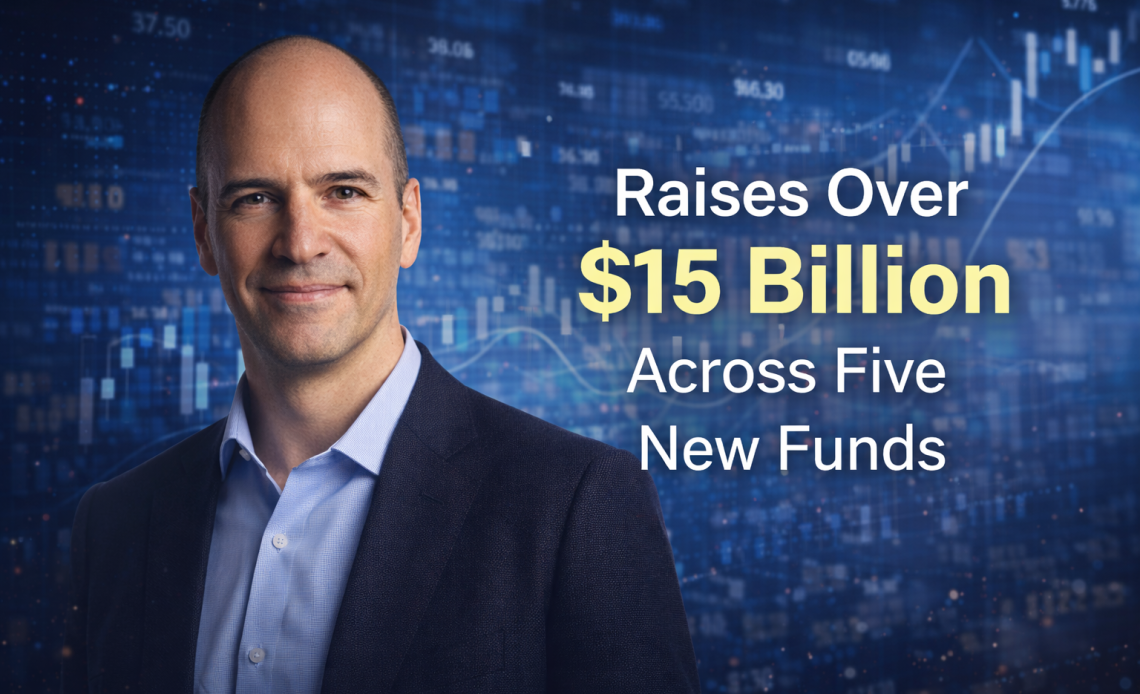
Andreessen Horowitz just pulled in more than $15 billion across five new investment funds, a pretty impressive haul considering the broader venture capital market has been cooling off. The fundraising comes less than two years after the firm’s last big round of $7.2 billion back in April 2024.
The money’s being split across different focus areas. There’s $6.75 billion going into a growth fund aimed at scaling startups, $1.7 billion earmarked for AI infrastructure investments, and $1.12 billion dedicated to what they’re calling “national interests”—think defense and supply chain companies.
That last fund is worth paying attention to. It’s not every day you see a major VC firm explicitly carve out capital for defense and supply chain investments with that kind of framing.
Why This Matters in a Slow Fundraising Environment
Here’s the thing: venture capital fundraising has been rough lately. Industry data shows new commitments to VC funds dropped significantly last year, hitting the lowest number of new funds launched in a decade. Plenty of firms have struggled to close rounds or had to scale back their targets.
So when a16z can raise $15 billion in this environment, it tells you something about how capital flows in venture. The big, established firms with proven track records keep attracting money even when everyone else is getting squeezed. Limited partners—the institutions and individuals who invest in VC funds—still have cash to deploy. They’re just being a lot more selective about who gets it.
Andreessen Horowitz has the kind of resume that opens doors. Early investments in Facebook, Instagram, and Coinbase give you credibility that newer or smaller firms can’t match. When you’ve returned billions to your investors over the years, they tend to pick up the phone when you’re raising your next fund.
The Geopolitical Angle
Ben Horowitz, a16z’s co-founder, didn’t hide the ball on why they’re focusing on areas like defense and national interests. “At this moment of profound technological opportunity, it is fundamentally important for humanity that America wins,” he said in a statement.
That’s about as direct as it gets. The framing positions their investment strategy as not just about returns but about maintaining U.S. technological leadership against competitors—presumably China, though he didn’t name names.
It’s worth noting that Marc Andreessen, the firm’s other co-founder, is a prominent donor and advisor to the Trump administration. Whether that relationship influenced the fund’s national interests focus or just reflects shared priorities is unclear, but the political connections probably don’t hurt when you’re investing in defense-related startups that often work with government contracts.
What a16z Plans to Do With the Money
The firm now manages over $90 billion in assets total, putting it firmly in the mega-VC category. There were earlier reports that a16z was seeking a roughly $20 billion megafund focused on AI, so this $15 billion raise might be part of that broader effort or a pivot to a more diversified approach.
The AI infrastructure fund makes sense given where the market’s headed. Everyone’s pouring money into AI companies right now, but infrastructure—the chips, data centers, tools, and platforms that make AI possible—is where a lot of the value capture might actually happen. It’s less flashy than funding the next ChatGPT competitor, but potentially more defensible.
The growth fund is classic late-stage VC strategy: find companies that have already proven product-market fit and help them scale up. Less risky than seed investing, but you’re also paying higher valuations for that reduced risk.
What’s interesting is how a16z is packaging this. Rather than one massive fund, they’re creating multiple vehicles with distinct themes. That gives them flexibility to pitch different stories to different types of limited partners depending on what they care about—AI, defense, growth-stage opportunities, whatever.
For now, a16z has the capital and the positioning to keep making big bets while others sit on the sidelines. Whether those bets pay off is the question that won’t get answered for years.
