Cent, a Bengaluru-based healthtech startup co-founded by Practo’s Shashank ND, has raised an undisclosed seed round from OneFlow Holdings — the family office of Shashank himself — and venture firm South Park Commons. The company is building an AI-led early disease detection platform targeting conditions that account for the majority of deaths globally, including cancer, cardiac disease, and metabolic disorders.
Joining Shashank in founding the company are Arpit Garg, formerly of Lenskart, and Anshul Khandelwal, previously at Ola Electric, who serves as chief business officer.
A Different Approach to Preventive Healthcare
What sets Cent apart, according to its founders, is a deliberate focus on early detection rather than general wellness or disease management. “Unlike most preventive healthcare services, we are solely focused on early detection of life-threatening diseases such as cancer, and cardiac and metabolic conditions that comprise about 70–74% of deaths globally,” Khandelwal told ET.
The startup also diverges from the dominant business model in Indian healthcare. Rather than selling services to hospitals, insurers, or corporations, Cent operates on a direct-to-consumer basis. The company says it earns no commissions from any third-party medical providers, positioning itself as an independent service aligned solely with the patient.
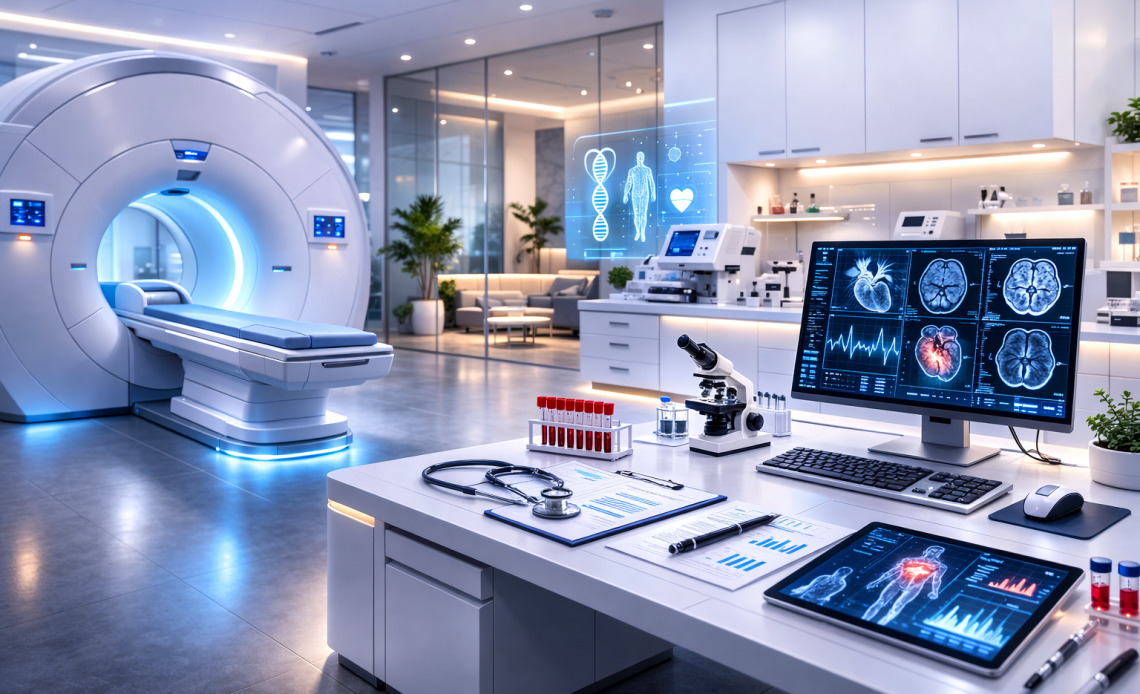
At the heart of the platform is a proprietary screening protocol the company calls CCNM — covering cardiac, cancer, neurological, and metabolic health. Each screening combines full-body MRI, cardiac CT, ECG, DEXA scans, more than 120 blood and urine biomarkers, and genomic testing. The data is processed using artificial intelligence and reviewed by radiologists and specialists, ultimately producing a detailed organ-level report of 60 to 70 pages, with a health score assigned to each organ.
Cent measures the effectiveness of this approach through what it calls an Early Detection Index, which it claims sits at around 83% — compared to roughly 15 to 20% for conventional annual health checkups.
Early Results and Expansion Plans
The company has been operational since the first quarter of FY26 and reports completing more than 1,500 scans to date. Of those, 26% revealed clinically meaningful findings. More striking, 3 to 4% detected critical conditions — including cancer and serious cardiac blockages — in individuals who had shown no symptoms at all.
Cent says it is growing at approximately 50% month-on-month and has reached an annualised revenue run rate of around $2 million.
The founding team says the company’s mission is rooted in personal loss. Both Shashank and Khandelwal lost family members to cancer, and that experience shaped their understanding of a systemic gap in healthcare infrastructure. “In the preventive space, we need dedicated infrastructure, the right technology, the right protocols, the right capital, built specifically for detection. That is the gap Cent is designed to close,” Shashank said.
With the seed capital now secured, the startup plans to open dedicated early detection centres across India’s major cities. The first is expected to launch in Bengaluru in April, with Mumbai, Delhi, and Hyderabad to follow. Khandelwal indicated that a Series A raise — expected to be five to six times the size of the current round — will fund further network expansion and an eventual push into international markets.
Cent enters a global space that is drawing increasing investor attention. Companies such as Prenuvo, Function Health, and Sweden’s Neko Health are pursuing similar models, integrating AI-driven diagnostics with comprehensive preventive screening. In India, where healthcare spending remains at roughly 3% of GDP — well below most developed economies — the opportunity for early disease detection at scale is substantial, and largely untapped.