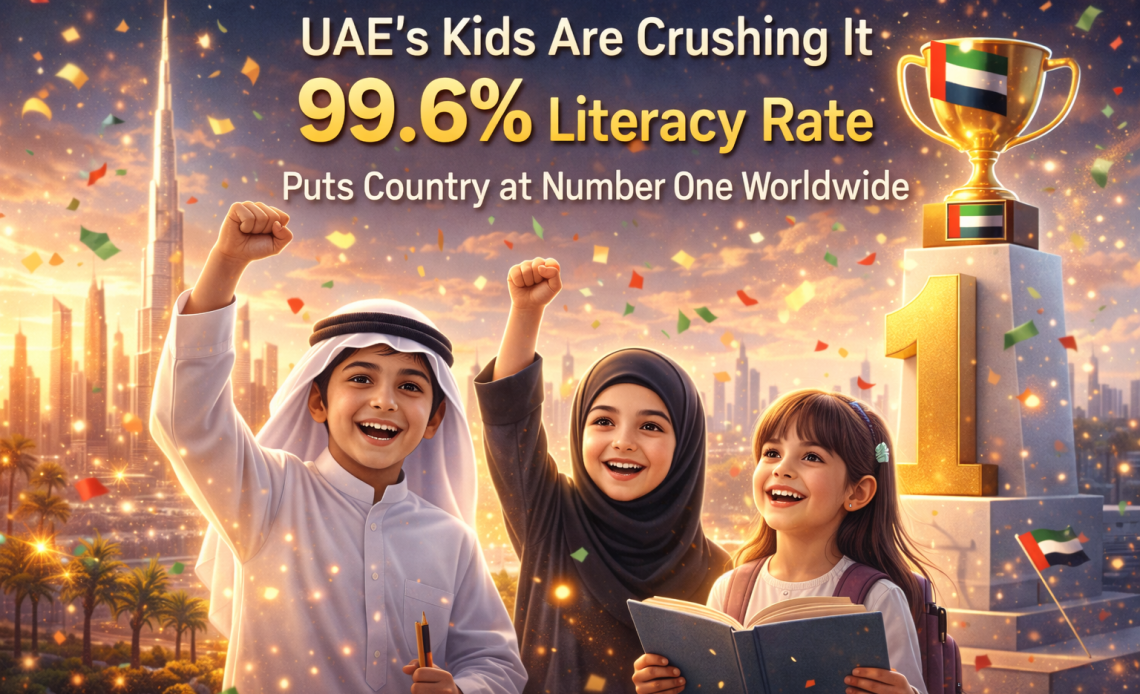
Here’s a stat that’ll make you do a double-take: 99.6 percent of young people in the UAE between ages 15 and 24 can read and write. Not 85 percent. Not even 95 percent. We’re talking 99.6 percent—which basically means almost every teenager and young adult in the country is literate.
The UAE Government Annual Meetings dropped this bombshell in their latest Unified Numbers Report, and the UN’s Sustainable Development Goals Index confirmed it: the UAE now ranks first in the world for youth literacy. First. In the entire world.
Let that sink in for a second.
Jump Ahead To:
How Did We Get Here?
This didn’t happen overnight, and it definitely didn’t happen by luck. The UAE has been throwing serious money and effort at education for years now, treating it less like a budget line item and more like the entire point of building a modern country.
Think about what 99.6 percent actually means on the ground. Walk into any classroom, any youth center, anywhere young people gather in the UAE, and you’d be hard-pressed to find someone who can’t read a book, fill out a form, or write an email. That’s not normal, even in wealthy countries. Plenty of developed nations would kill for numbers like these.
The report also mentioned that the average person here spends about 13.36 years in school. That’s not just showing up for a few years of elementary education and calling it done. That’s sticking around through high school and often beyond, actually learning things that matter.
It’s Not Really About Oil Anymore
Look, everyone knows the UAE built its wealth on oil. That’s not a secret, and there’s nothing wrong with it. But here’s what’s changed: the country figured out a while back that oil isn’t forever, and even while it lasts, you can’t build a modern economy on just one resource.
So they made a bet on education. A big one. The thinking goes something like this—if you want an economy based on innovation, technology, and ideas instead of just natural resources, you need people who can actually innovate, work with technology, and come up with ideas. And that requires education. Real education, not just the bare minimum.
The schools here have been revamped to meet international standards, which sounds bureaucratic and boring until you realize it means kids in Abu Dhabi or Dubai are getting an education that stacks up against kids in London, Singapore, or New York. The curriculum gets updated regularly because what students needed to know ten years ago isn’t necessarily what they need now.
Every level of the system has gotten attention—from kindergartens where kids are learning to read all the way up to universities conducting actual research. It’s a complete package, not just fixing one part and ignoring the rest.
Universities That People Actually Want to Attend
Here’s something that would’ve seemed crazy twenty years ago: students from other countries are now choosing to study at UAE universities. Not as a backup plan. Not because they couldn’t get in anywhere else. They’re actively choosing to come here.
That’s because UAE universities have gotten really good, really fast. They’ve hired top-tier professors from around the world, built proper research facilities, and started offering programs that actually prepare you for real careers, not just generic degrees that look nice on paper.
The focus has shifted from just handing out diplomas to making sure graduates can actually do something valuable when they leave. What does the job market need right now? What will it need in five years? Those questions are driving what gets taught, which seems obvious but isn’t how a lot of universities operate.
Students here aren’t just memorizing facts and taking tests anymore. They’re solving problems, working on projects, learning skills that translate directly into the workplace. It’s education that has a purpose beyond itself.
The Hard Part: Keeping It Going
Hitting 99.6 percent is amazing. Staying there? That’s the real challenge.
The UAE’s population keeps growing and keeps getting more diverse. Maintaining these literacy rates when you’ve got people moving here from dozens of different countries, speaking different languages, coming from different educational backgrounds—that’s not easy. It requires constant work, constant resources, and constant attention to making sure nobody falls through the cracks.
But the government seems committed to it. Education isn’t treated as just another thing they do. It’s treated as the thing—the foundation everything else depends on. And honestly, that makes sense. You can build all the fancy skyscrapers and innovation hubs you want, but if people can’t read, write, and think critically, none of it matters much.
For the kids growing up here now, these numbers mean something tangible. It means almost everyone around you has the same basic tools for navigating life. It means job opportunities actually exist because companies know they can find educated workers. It means you’re not locked out of participating in society because you never learned to read properly.
What Everyone Else Is Probably Wondering
Other countries looking at these numbers are probably asking themselves: how much does this actually cost, and is it worth it?
The UAE’s answer seems to be: whatever it costs, it’s worth it. When you’re trying to build a future that doesn’t depend entirely on oil revenues, investing in people’s brains isn’t optional. It’s the whole game.
Will other places follow the same path? That’s hard to say. Not every country has the resources the UAE does, obviously. But the basic principle—that you need to invest heavily and consistently in education if you want good results—isn’t exactly rocket science. The UAE just happens to be proving it works when you actually commit to it.
Right now, with a 99.6 percent youth literacy rate and climbing, the UAE’s education experiment looks like it’s succeeding. Whether that success continues depends on whether they keep doing what got them here: treating education like it’s the most important investment a country can make. Because, let’s be honest, it probably is.