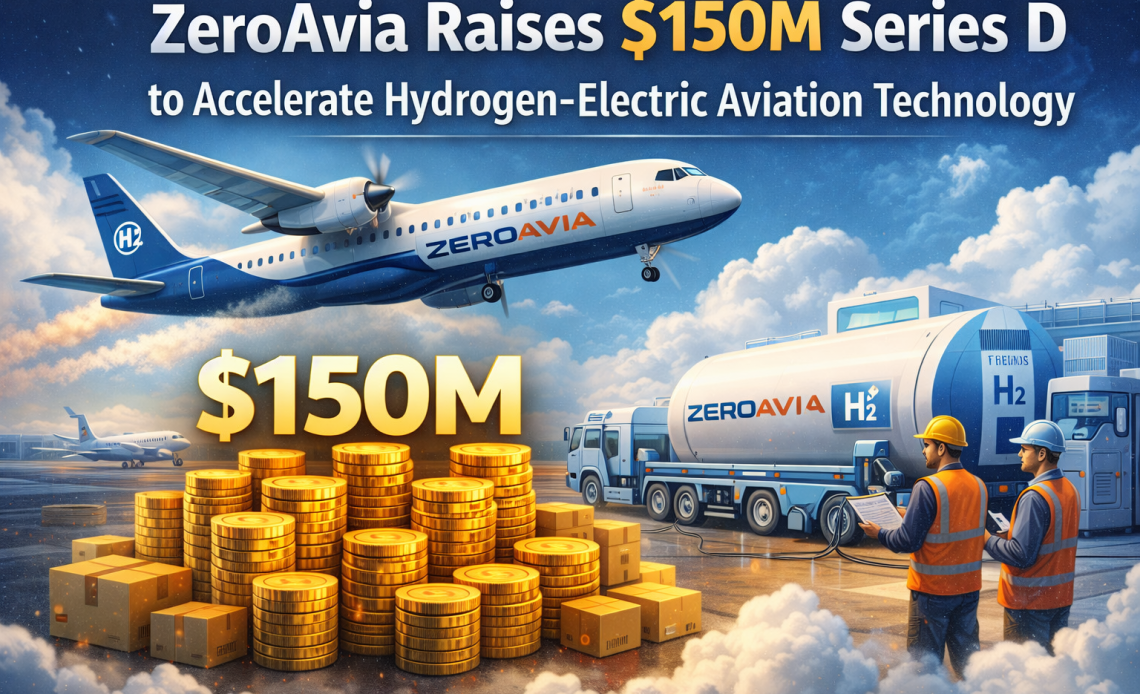
ZeroAvia, an electric aviation startup trying to replace traditional jet engines with hydrogen fuel cells, just closed a $150 million Series D round led by climate-focused investors. The funding, announced December 22, was led by Barclays Climate Ventures with backing from Breakthrough Energy Ventures, Ecosystem Integrity Fund, Horizons Ventures, Summa Equity, and AP Ventures. The Russian National Wealth Fund and Scotland’s National Investment Bank also chipped in.
For a company attempting to fundamentally change how planes fly, landing this kind of investor backing is a pretty big deal. ZeroAvia isn’t just tinkering with prototypes in some workshop—they’re pushing toward actual commercial certification and production, which is where things get expensive and complicated in the aviation world.
Starting Small with Regional Aircraft
ZeroAvia is focused on hydrogen fuel-cell engines that can replace conventional engines in commercial planes. Right now, their main priority is the ZA600 engine, built for regional aircraft with 10 to 20 seats. These aren’t the massive 747s crossing oceans—they’re the smaller planes connecting regional airports and handling short flights that most people don’t think much about.
That strategy actually makes a lot of sense. Smaller aircraft are way easier to certify and get to market than huge jets. Regional aviation also produces a significant chunk of emissions that don’t get nearly as much attention as long-haul flights. Plus, the infrastructure challenges—like building hydrogen refueling stations—are more manageable when you’re dealing with a handful of regional airports instead of trying to retrofit every major international hub on the planet.
The fresh $150 million will help ZeroAvia keep the lights on and speed up certification of the ZA600 engine. Getting any aviation technology certified is brutally slow and expensive. Aviation regulators don’t take chances when it comes to safety, which means proving your hydrogen-electric engine won’t fail at 10,000 feet requires years of testing, mountains of documentation, and endless regulatory reviews.
Why Investors Are Betting on Hydrogen
Aviation is one of the hardest industries to clean up. Electric batteries work great for cars and even some boats, but they’re way too heavy for most aircraft. You’d need so much battery weight to power a plane for any decent distance that it defeats the whole purpose—weight is the enemy when you’re trying to get something off the ground.
Hydrogen fuel cells offer a potential workaround. They generate electricity by combining hydrogen with oxygen, and the only byproduct is water. The energy density is much better than batteries, and if you’re using hydrogen produced from renewable energy, the environmental impact is minimal. That’s a big “if,” though, since most hydrogen today still comes from natural gas. But the concept is solid.
Barclays Climate Ventures leading this round shows that serious institutional money is starting to believe hydrogen aviation might actually happen. Breakthrough Energy Ventures, which Bill Gates founded to back technologies that can make a real dent in emissions, has been supporting ZeroAvia for a while now. Their continued investment suggests they still think hydrogen-electric planes can go from interesting idea to commercial reality.
Scotland’s National Investment Bank joining in is also worth noting. Scotland has been going all-in on hydrogen infrastructure and green energy, so backing ZeroAvia fits their plan to become a major player in clean tech.
Building the Infrastructure and Partnerships
ZeroAvia plans to use the funding to expand production facilities and forge more partnerships. Building hydrogen-electric engines at scale isn’t like assembling prototypes in a lab. They need manufacturing capabilities, supply chains for fuel cells and hydrogen storage systems, and all the specialized components that make these powertrains actually work.
Partnerships are just as critical. ZeroAvia needs aircraft manufacturers willing to integrate their engines, airlines willing to take a chance on the technology, and airports willing to install hydrogen refueling infrastructure. In an industry as conservative as aviation—where safety and proven reliability matter more than innovation—those partnerships don’t happen quickly.
The company is going after both commercial and defense aviation markets. The defense angle is pretty smart. Military buyers often adopt new technology faster than commercial airlines, especially if it offers advantages like simpler fuel logistics or quieter operations. Defense contracts can also provide steady revenue while the commercial side of the business develops.
The Reality Check on Timelines
Let’s be honest about where things stand. Even with $150 million in the bank, ZeroAvia is still years away from hydrogen-electric planes carrying regular passengers. Certification alone could stretch into 2027 or beyond, and that’s assuming everything goes according to plan—which rarely happens in aviation.
Then you’ve got the whole infrastructure problem. Airports need hydrogen production or delivery systems, storage facilities, and specialized refueling equipment. Airlines need to train maintenance crews on completely new propulsion technology. Regulators need to write safety standards for hydrogen operations at airports. None of that happens quickly or cheaply.
But the fact that ZeroAvia keeps attracting this level of investment tells you the aviation industry is starting to take hydrogen seriously as a realistic path toward decarbonization. Aviation currently accounts for about 2-3% of global CO2 emissions, and that share is expected to grow as other sectors clean up faster. Finding a viable alternative to jet fuel isn’t optional anymore if the industry wants to hit its net-zero targets by mid-century.
ZeroAvia has positioned itself as one of the front-runners in hydrogen-electric aviation, and this $150 million gives them the resources to keep pushing toward certification and eventual commercial deployment. Whether hydrogen-electric planes become standard or stay niche depends on how well they can crack the technical, regulatory, and infrastructure challenges still ahead.
But with climate investors writing checks this big, the bet is that ZeroAvia might actually pull it off. We’ll find out in a few years whether they were right.